Your new website is live – so what happens next?
Firstly, congratulations! 🎉 After all the planning, designing, content writing and tweaking, it’s tempting to think the hard work is done.
You can sit back, relax and wait for the enquiries to start rolling in…
Unfortunately, it doesn’t quite work like that!
After more than 30 years working with businesses in Essex and beyond, one thing I’ve learned is that launching a website is really just the starting point.
I often compare it to passing your driving test. Getting the certificate is a huge achievement, but the real learning starts once you’re out on the road on your own.
Your website is no different. It gives your business a professional home online, but you still need to tell people you’re there and give potential customers reasons to find and visit it.
The good news is that you don’t necessarily need a huge marketing budget to get started. There are plenty of things you can do yourself to help give your new website – and your business – the best possible start.
So, where should you begin?
First things first – give Google a little time
One of the most common questions I hear after launching a new website is:
“Why can’t I find my website on Google yet?”
Don’t panic!
New websites can take several weeks to be crawled and indexed by Google and, in some cases, longer. Even once your pages have been indexed, that doesn’t mean they’ll immediately appear prominently for all the search terms you’d like to be found for.
Every new website I build includes strong SEO foundations, with search-friendly page structures and the appropriate Google products configured where included within your package.
But good SEO foundations don’t guarantee immediate rankings or high search positions – and neither does simply having a lovely new website.
Building visibility takes time.
So, while Google is getting to know your website, let’s look at some practical ways to start spreading the word.
Get your Google Business Profile working for you
If you’re a local business, your Google Business Profile can be one of the most useful free tools available to you.
It allows your business to appear across Google Search and Maps, giving potential customers useful information such as your contact details, opening hours, services, photographs and reviews.
Make sure your profile is complete and accurate, with good-quality photographs that genuinely represent your business. And don’t set it up and forget about it – if your opening hours, contact details or services change, keep it updated.
→ Read more here: Why do you need a Google Business Profile?
Start building your Google reviews
If you’ve got happy customers, ask them for a review!

Reviews provide valuable social proof and can give potential customers more confidence when deciding whether to contact you. Google also allows businesses to create a direct review link or QR code, making it much easier for customers to leave feedback.
A simple way to make asking for reviews even easier is with dedicated Google Review cards…
Alongside your usual business cards – whether personalised for individual team members or designed as a generic company card – I can create a separate review card featuring a QR code that takes customers directly to your Google review page.
Simply hand one over after completing a job or providing a service, and your customer can scan the code with their phone and leave their feedback there and then.
Try to make asking for reviews part of your normal process rather than remembering once every six months. And don’t forget to respond to them – a quick, genuine reply shows there’s a real person behind the business and that you value their feedback.
One word of warning: don’t offer freebies or discounts in exchange for Google reviews, as incentivised reviews aren’t permitted under Google’s policies.
Tell people your new website is live!
This sounds ridiculously obvious, but you’d be surprised how many businesses launch a new website and then barely mention it.
Tell people!
Share it through your social media accounts. Add the address to your email signature. Update your online directories and business profiles. Mention it to existing customers and suppliers.
If you’ve redesigned an existing website, talk about what’s changed. Perhaps you’ve introduced new services, made it easier to request a quote, added an online shop or created a useful new resources section.
Give people an actual reason to click through and have a look.
Choose the right social media platforms
You do not need to be on every social media platform going.
Facebook, Instagram, LinkedIn, YouTube, TikTok… trying to maintain everything can quickly become a full-time job in itself.
Instead, think about where your customers are most likely to spend their time and concentrate on one or two platforms you can realistically keep active.
Instagram can be a natural fit for visual businesses, LinkedIn can work particularly well for B2B companies and professional services, while Facebook can still be useful for local businesses. YouTube and TikTok can suit businesses with useful advice, demonstrations or interesting behind-the-scenes content to share.
Most importantly, give people something worth looking at.
You could share:
- Recent projects or completed work
- Before-and-after photographs
- Customer reviews
- Helpful tips and FAQs
- New products or services
- Case studies
- Behind-the-scenes glimpses of your business
- Useful articles from your website
- Company or team news
You don’t have to post constantly. A smaller number of useful, genuine updates is far better than filling people’s feeds simply because somebody told you that you must post three times a week.
Keep adding genuinely useful content
Your website doesn’t need a new blog article every week simply to keep Google happy.
 Your website doesn’t need a new blog article every week simply to keep Google happy.
In fact, Google recommends creating helpful, people-first content rather than publishing content primarily to manipulate search rankings or make a website appear “fresh”.
Instead, think about information that would genuinely help your customers.
- Could you add a detailed page about a service people regularly ask about?
- Could a completed project become a case study?
- Are there common questions you could answer in an FAQ?
- Could you create a useful guide explaining something customers often find confusing?
New service pages, case studies, project pages, FAQs, articles and useful guides can all demonstrate your experience while giving visitors more helpful information.
And if staring at a blank page fills you with dread, I can help with that too.
My AI-assisted copywriting service provides an affordable way to turn your ideas, notes and business knowledge into clear, professionally structured website content. For projects requiring detailed keyword research or specialist writing, professional copywriting is also available.
→ Discover my Copywriting Services
Don’t forget the people who already know you
Marketing isn’t only about finding completely new customers.
If you already have a legitimate customer or mailing list, email can be a useful way to let people know about your new website, introduce a new service, share useful information or simply remind previous customers that you’re still there.
You don’t need to bombard people’s inboxes. Occasional, genuinely useful communication can be much more effective than sending emails simply because your marketing calendar says it’s Tuesday.
Just make sure any marketing communications you send comply with the relevant UK data protection and electronic marketing requirements.
Make your printed marketing work with your website
Your website might live online, but your marketing certainly doesn’t have to.
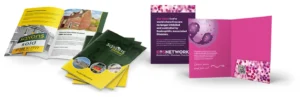
Professionally designed print can still be a great way to put your brand directly in front of potential customers – particularly if you’re targeting a local audience, attending an exhibition, sending information to prospects or meeting customers face to face.
Depending on your business, this might include:
- Business cards
- Leaflets and flyers
- Brochures and booklets
- Presentation folders
- Exhibition graphics
- Roller banners
- Signage
- Promotional materials
The important thing is consistency. Your logo, colours, typography, imagery and overall message should feel like the same business whether somebody finds you through Google, picks up your brochure or meets you at an exhibition.
And make it easy for people to move from print to digital. Include your website address clearly, or use a QR code to send people directly to a relevant service, product, landing page or contact form.
→ Explore my Print Solutions
Keep your website looked after
Launching your website isn’t the end of the technical work either.
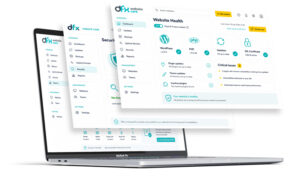
WordPress, themes and plugins all need ongoing maintenance, along with regular backups, security monitoring and software updates.
If your website is hosted with me, DFX Website Care looks after the technical essentials, with Essential and Pro plans offering different levels of maintenance and support. Larger and eCommerce websites are quoted individually to reflect their additional requirements.
That means you can concentrate on running your business without having to remember whether WordPress needs updating this week.
→ Discover DFX Website Care
Keep your website moving with your business
Your business won’t stand still – and your website shouldn’t either.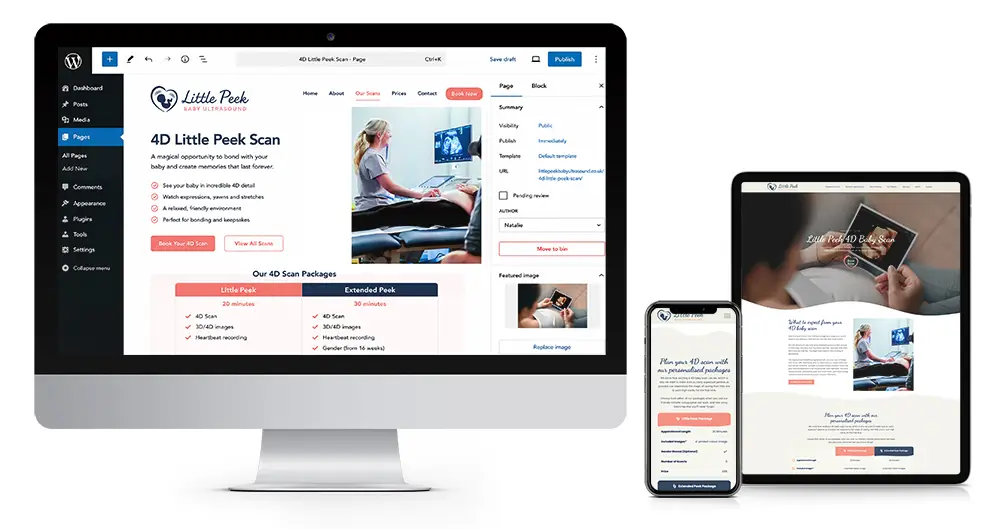
Perhaps six months after launch, you’ve introduced a new service. You’ve completed some fantastic projects you’d like to showcase. A new member has joined the team. Your prices have changed. Or you’ve finally found those photographs you promised me three months ago. 😂
That’s where DFX Website Support comes in.
Website Care maintains your website; Website Support helps it evolve.
→ Discover DFX Website Support
Ready to take your marketing further?
Once your website has had time to be crawled and indexed, you may decide you’d like to invest in increasing its visibility further.
For advanced SEO, AI Visibility Optimisation, SEO & GEO strategy and Google Ads (PPC), I work closely with Front Page Advantage, my trusted specialist digital marketing partner.
A free SEO & PPC Health Check can help identify opportunities and establish whether further digital marketing would benefit your business.
And if you’re looking to generate targeted traffic more quickly after launch, Google Ads can also be considered while your organic search visibility develops.
I’ll remain involved wherever your campaign requires website changes, new content, landing pages or further development.
So… where should you start?
Looking at everything above, you might now be thinking:
“Blimey, Natalie. I thought you said this was going to make things easier!” 😂
Don’t worry. You don’t need to tackle everything at once.
Start with what makes the most sense for your business, your customers and the time and budget you have available.
The important thing is simply not to launch your website and then forget about it.
Keep talking about your business. Keep giving people reasons to visit. Keep building your reputation both online and offline.