If you’re keen to update your marketing materials, but don’t have thousands of pounds to spend on revamping your entire print portfolio, help is at hand!
There are in fact plenty of ways you can add a little sparkle to your brochures and business stationery without breaking the bank. Here, I’ve listed 5 simple ways that you can create more impactful printed materials that will make your audience sit up and take notice of your brand.
1. Choose a suitable paper weight
Have you been let down by the quality of your brochures or business cards in the past?
Chances are that the look and feel of your assets could have been dramatically improved with a better GSM.
GSM stands for grams per square metre and refers to the weight of the paper or card. Generally, the higher the GSM, the heavier the material will feel, although thickness and quality also depend on the type of stock used.
Choosing the right paper weight can make a noticeable difference to your finished materials. A lightweight leaflet, for example, has different requirements from a premium business card or brochure cover. I can help you choose a stock that suits both your design and your budget.
2. Make use of spot colours
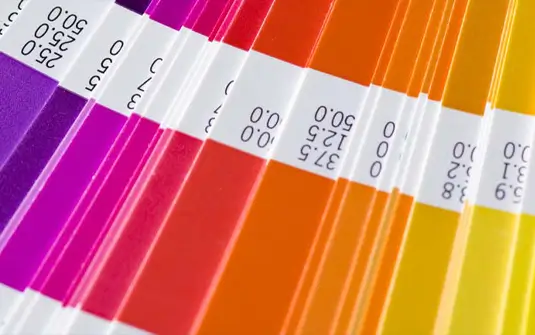
Spot colours use specially mixed inks to reproduce particular colours, rather than combining cyan, magenta, yellow and black (CMYK) inks to create them.
If your brand guidelines specify a particular Pantone colour, spot-colour printing can be useful when consistent colour reproduction is especially important.
However, it’s not always necessary or the most cost-effective option. Many everyday print jobs use CMYK, and I’ll always recommend the most suitable printing method for your project, taking your branding, budget and quantities into account.
3. Laminate your design work
From subtle matt finishes to high-gloss effects, lamination can also enhance the overall look and feel of your printed materials.
Smoother surfaces give off a quality impression, and what’s more, laminated business cards, leaflets and flyers will be more resistant to wear and tear.
Lamination can also be particularly useful for restaurant and bar menus that need to withstand frequent handling, although the most suitable finish will depend on how the menus are used.
4. Experiment with die cutting
Die cutting involves using a special machine to mass-produce cut-out shapes.
From simply using rounded corners instead of straight edges to creating fascinating pop-ups within greeting cards, you can use this technology to create one-of-a-kind materials in all kinds of funky designs that are sure to stand out from standard print fare.
Die cutting is particularly well-suited to business cards, but you can also use the process to develop imaginative flyers and mail-outs that will be instantly more intriguing than those with everyday square or rectangle templates.
If you’re considering an unusual shape or specialist finish, my litho printing service offers plenty of creative possibilities, including die-cutting, embossing and foil finishes.
5. Add texture by embossing or debossing
Specialist printing techniques such as embossing and debossing can add raised or recessed details to business cards, presentation folders and other printed materials.
Embossing raises graphics from the surface of the paper to create a distinctive three-dimensional effect. Debossing has the opposite effect, pressing letters or images into the material to create a recessed finish.
Plus, foils can be incorporated into the embossing or debossing process to add colour to your designs and make them even more eye-catching!
Need help bringing your print designs to life?
There are so many tools and techniques available to brands today, so it’s never been easier to get creative with your printed marketing collateral.
However, if you’re not familiar with the printing process, it can be tricky to know which effects are going to best suit your project (and be within your budget).